Year 7 – 9
History

Key Stage: KS3
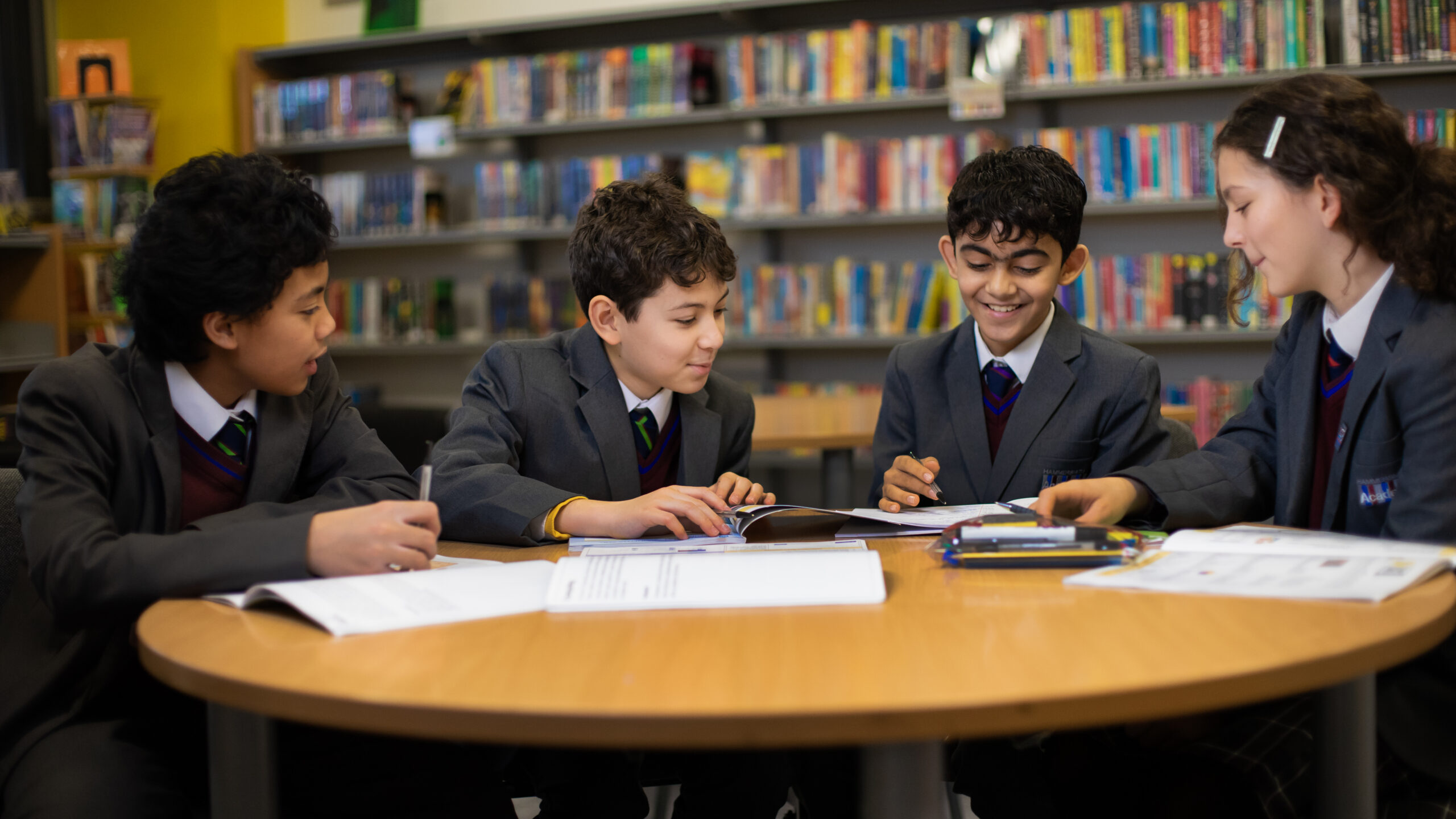
Every story has a beginning – and History helps students uncover theirs. By exploring the events, people, and ideas that have shaped societies across time, students learn to question, interpret, and understand the world they live in today. History at Hammersmith Academy nurtures curiosity, critical thinking, and a lifelong appreciation of the past.
Our vision is to lead students toward two essential outcomes of studying History – understanding where they have come from and where they could go – while empowering them to create and defend opinions based on a wide range of sources, interpretations and evidence.
At HA, we deliver a culturally rich, contextually relevant and high-skilled curriculum designed to help students understand how the history of the UK and the wider world has shaped their lives today. By the end of Key Stage 3, they are equipped to articulate, explain and debate historical ideas with confidence.
Students learn to apply the core historical concepts of cause and consequence, change and continuity, and similarity and difference, using these frameworks to compare events and societies across time periods. This approach builds the analytical and evaluative skills required for success at GCSE and beyond.
From the very start, students are immersed in the discipline of ‘being a historian’. They explore diverse historical sources and interpretations, developing their own judgements through enquiry-led modules built around key historical questions and debates rather than memorisation of facts.
The Key Stage 3 History curriculum follows a chronological structure to build context and cultural awareness. Each module is shaped by a historical enquiry aligned to a second-order concept, encouraging students to balance their understanding of British history with global perspectives.
Each year begins with a focus on comprehension and exam-style skills before advancing to more independent sessions that strengthen critical reading, source evaluation, and comparative analysis.
Year-by-Year Curriculum
Year 7
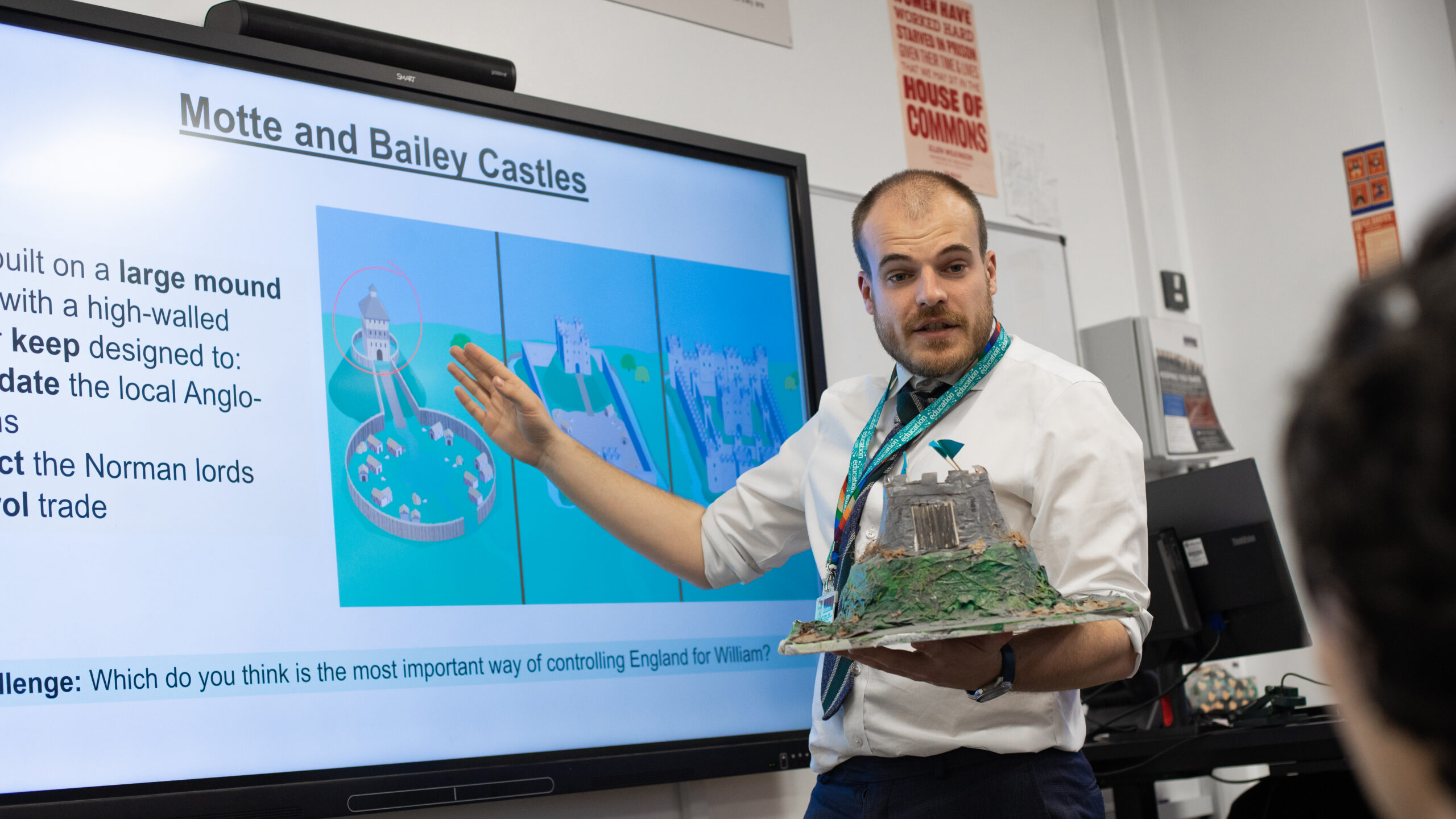
Students explore how power, belief and social structures shaped life in the medieval and early modern world. They also examine global perspectives beyond Europe to understand how ideas and cultures interacted.
Modules include:
- How was the Feudal System created? (Module 1)
- Why did the Feudal System collapse? (Module 2)
- How different was life in the Islamic Golden Age? (Module 3)
- How did the Reformation change Europe and the World? (Module 4)
- How can sources help us understand the English Civil War? (Module 5)
- How has piracy evolved over time? (Module 6)
Students develop key skills in comprehension, explanation and prioritisation while practising how to analyse and evaluate historical sources.
Year 8
Students examine the expansion and transformation of empires, the fight for rights, and the experiences of people through social, political and economic change.
Modules include:
- How did Britain justify its Empire? (Module 1)
- How did the Mughal Empire differ to Britain’s? (Module 2)
- How did the USA adapt to the end of slavery? (Module 3)
- How did workers get the vote? (Module 4)
- How did soldiers experience World War One? (Module 5)
- How have women’s rights evolved over time? (Module 6)
These studies deepen understanding of human progress and challenge students to consider perspectives of power, protest and change.
Year 9
Students explore the dramatic events and movements that shaped the modern world — from global conflict and decolonisation to social justice and civil rights.
Modules include:
- How was World War II won? (Module 1)
- What was life like in the shadow of the bomb? (Module 2)
- Why did decolonisation vary in different places? (Module 3)
- Why is there conflict in the Middle East? (Module 4)
- How did Black People in Britain win their civil rights? (Module 5)
- How has anti-Semitism changed over time? (Module 6)
Through these enquiries, students strengthen their comprehension, explanation, prioritisation and source analysis skills, preparing them for the analytical demands of GCSE History.
Skills Gained
- Critical analysis and evaluation of sources
- Understanding of continuity, change and causation
- Evidence-based argument and interpretation
- Communication and extended writing skills
- Cultural awareness and empathy
These skills empower students to think independently, challenge assumptions and understand the world through multiple perspectives.
Partnerships & Enrichment
Students enhance their classroom learning through immersive experiences that deepen their understanding of the past.
Regular trips and partnerships include:
- Imperial War Museum
- Hampton Court Palace
These visits allow students to connect directly with historical artefacts, locations and narratives, enriching their appreciation of how history continues to shape the world around them.

Potential Careers
History builds versatile skills valued across many professions, including:
Law, Politics and International Relations | Journalism and Media | Education and Research | Heritage and Museum Studies | Public Policy and Business
The ability to analyse evidence, form reasoned arguments and understand complex societies prepares students for a wide range of future pathways.