Year 7 – 9
Computer Science

Key Stage: KS3
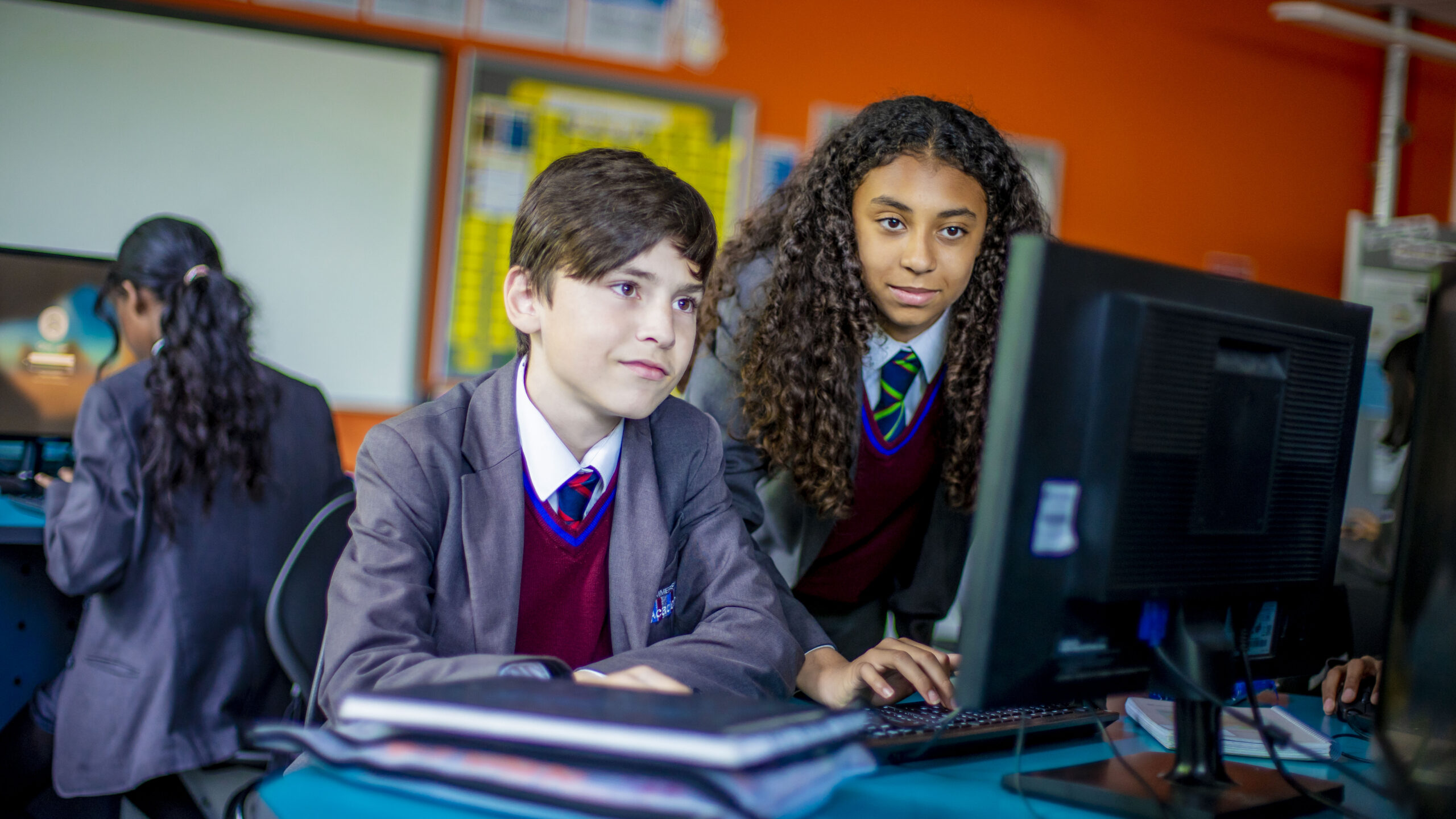
Computing at Hammersmith Academy fosters computational thinking, creativity and enjoyment, enabling students to understand and shape the world through problem-solving and digital literacy. Students develop the confidence, curiosity and technical skills needed to navigate an increasingly digital society and to participate as responsible, capable and innovative digital citizens.
Our Key Stage 3 Computing curriculum provides a structured and engaging introduction to both IT skills and Computer Science principles. Students begin by strengthening their digital literacy — understanding how computer systems work, navigating HA’s online platforms (SharePoint, Satchel One), and developing essential skills in word processing, presentation design, and data handling.
As students progress, they explore the fundamental principles of Computer Science, including abstraction, logic, algorithms, and programming. They begin with block-based programming tools such as Scratch and Micro:bit, which support their understanding of coding structure and the relationship between hardware and software. Students then transition to Python, building confidence in writing and debugging code, applying computational thinking to solve increasingly complex challenges. Across all three years, students also evaluate and apply information technology to real-world scenarios, learning about cybersecurity, data representation, and the impact of emerging technologies such as artificial intelligence. By the end of Key Stage 3, they are responsible, competent and creative users of technology, equipped with the foundational knowledge and problem-solving skills required for GCSE Computer Science or IT pathways
Year-by-Year Curriculum
Year 7
Students build confidence in navigating digital tools and understanding the foundation of computational thinking. They develop safe and responsible online behaviours, practise essential IT skills and gain an introduction to algorithms and programming.
Modules include:
- Module 1: Introduction to Computer Science and E-Safety
- Module 2: Word Processing and Presentation
- Module 3: Algorithms
- Module 4: Block Coding (Micro:bit)
- Module 5: Block Coding (Scratch)
- Module 6: Python
Year 8
Students extend their understanding of computer systems, networks and programming. They advance their Python knowledge, develop web design skills using HTML and CSS, and strengthen their data analysis skills through spreadsheet work.
Modules include:
- Module 1: Understanding Computer Systems
- Module 2: Python
- Module 3: HTML and CSS
- Module 4: Spreadsheets
- Module 5: Advanced Spreadsheets
- Module 6: App Development
Year 9
Students deepen their computational thinking by learning algorithmic design methods, including flowcharts, pseudocode and trace tables. They explore cybersecurity, AI concepts, and data storage while applying programming skills through a GCSE-style Python project. This project mirrors the full software development lifecycle, preparing students for Key Stage 4.
Modules include:
- Module 1: Algorithms and Programming
- Module 2: Python
- Module 3: Cyber Security
- Module 4: Uses of AI
- Module 5: Data Storage
- Module 6: Python Project
Skills Gained
- Computational thinking & logic
- Coding in block-based and text-based languages
- Problem-solving and debugging
- Digital literacy and IT competency
- Cybersecurity awareness
- Data analysis and representation
- Understanding of emerging technologies (AI, robotics, automation)
- Cross-curricular skills in numeracy and scientific reasoning
These skills support learning across all subjects and prepare students for the demands of modern careers and further study in digital disciplines.
Partnerships & Enrichment
Our Computing curriculum is enriched through partnerships and real-world experiences that broaden students’ cultural capital and ignite interest in the digital world:
- Bletchley Park
- Museum of Computing
- Microsoft DigiGirlz Trips
- Coding challenges, online competitions and enrichment clubs

Potential Careers
Computing opens doors to a wide range of digital and technical careers, including:
Software Developer | Programmer | Data Analyst / Data Scientist | App Developer | Game Designer / Developer | Graphic Designer | Tech Specialist | AI & Robotics Engineer | Marketing & Digital Communications | Cybersecurity Specialist
Students gain insight into how computing underpins almost every sector — from creative industries to engineering, finance, medicine and beyond.