Year 10 – 11
Combined Science

Key Stage: KS4

Exam Board: AQA

Qualification Gained: GCSE Combined Science

Assessment breakdown:
- Six examination papers in total: two Biology, two Chemistry and two Physics
- Each paper lasts 1 hour 15 minutes
- Each paper is worth 70 marks, contributing equally to the final grade
- Students are awarded two GCSE grades (9–9 to 1–1)
Assessment includes a range of question types:
- Multiple-choice questions
- Structured and short-answer questions
- Extended open-response questions
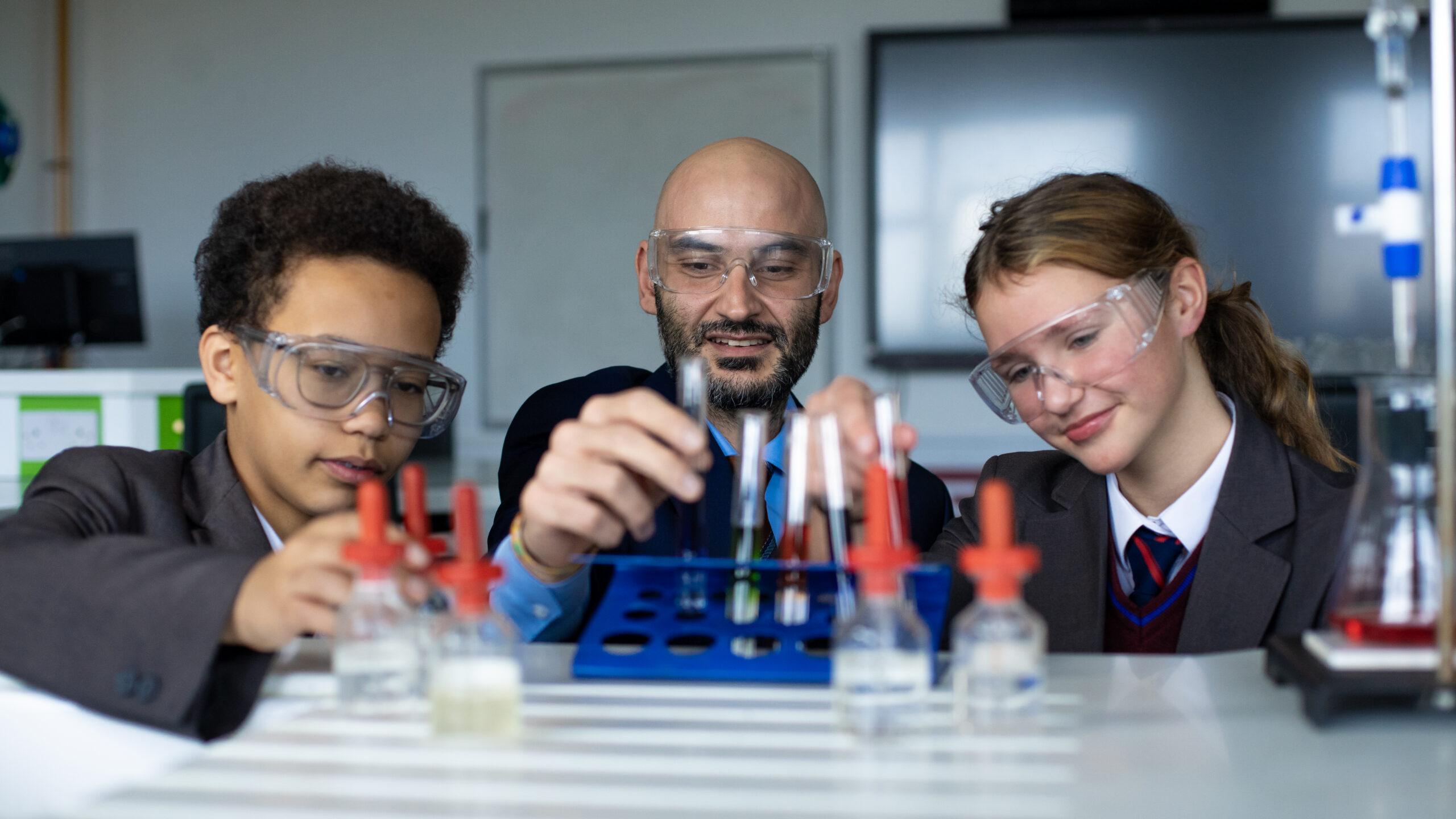
Students are also assessed on required practical investigations, developing and applying their scientific knowledge, analytical skills and mathematical understanding.
Science helps us make sense of the world from the smallest atom to the largest galaxy. The Combined Science GCSE cultivates confident, curious learners who can apply the big ideas of science to real-life contexts, developing strong scientific literacy and an enduring passion for discovery.
The Combined Science curriculum at Hammersmith Academy is built on a dynamic spiral model, designed to promote deep understanding through retrieval practice, practical work and synoptic links across Biology, Chemistry and Physics.
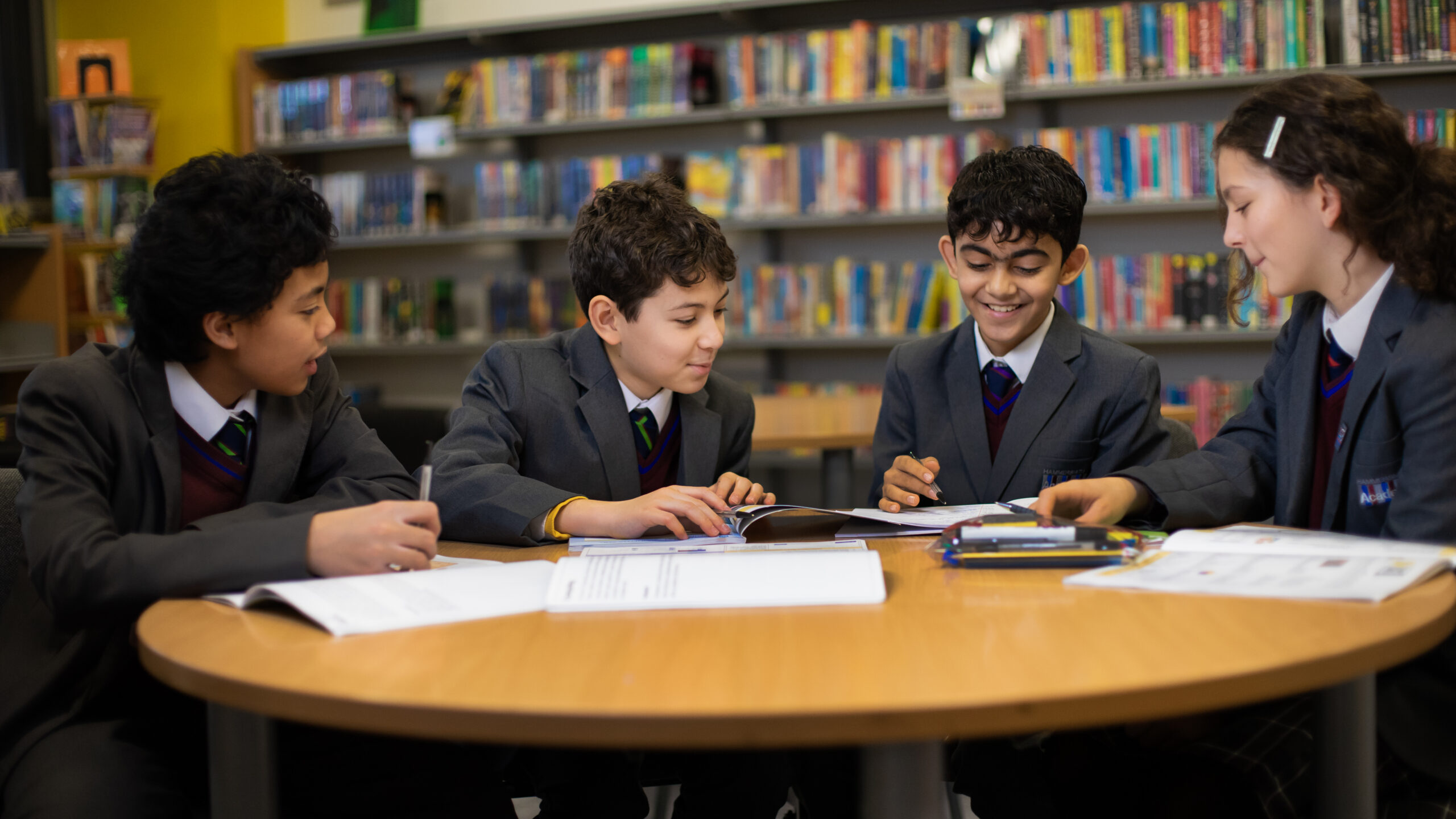
Students develop scientific literacy and practical skills through engaging lessons, guided experimentation and independent enquiry. The programme encourages curiosity, resilience and precision, while fostering a scientific mindset that values evidence-based reasoning.
Inclusive strategies ensure every learner, including those with SEND, can achieve excellence through targeted support, structured resources and adaptive teaching. A strong classroom culture, combined with consistent assessment for learning, feedback and the use of models, helps students progress confidently and meet high expectations.
At Key Stage 4, students build on the core knowledge and investigative skills developed in Key Stage 3. The curriculum is carefully structured to allow for knowledge retrieval and inter-topic connections, helping students to deepen understanding and make links between scientific principles.
Topics requiring greater mathematical and analytical maturity are reserved for Year 11, ensuring conceptual depth at the right stage of development. In the final term, students revisit key concepts and practicals in preparation for their GCSE examinations, consolidating both theoretical understanding and practical proficiency.
Year-by-Year Curriculum
Year 10
Students begin the course by deepening their understanding of fundamental principles in chemistry, biology and physics, while engaging in practical work to reinforce key ideas.
Modules include:
- Ionic Bonding and Ionic Compounds, Inheritance, Forces Part 4 (Module 1)
- Waves Part 2, Homeostasis Part 2 – Endocrine System, Rates Part 2 (Module 2)
- Electricity Part 3 – Series Connection, Acids, Magnets (Module 3)
- Particle Model Part 2, Covalent Bonding, Variation & Evolution (Module 4)
- Organic Chemistry & LCAs, Waves Part 3 – Electromagnetic Waves, Photosynthesis RPA & Plants Booklet (Module 5)
- Rates Part III – Equilibrium, Chemistry Part II Review, Electricity Part IV – Parallel Connection (Module 6)
Year 11
Students progress to more abstract scientific concepts, applying prior learning to complex systems and preparing for full GCSE examination readiness.
Modules include:
- Physics Part II Review, Radioactivity, Chemistry & Biology Review (Module 1)
- Quantitative Chemistry, Osmosis, Chemistry Paper 1 Review (Module 2)
- Electrolysis, Enzymes RPA, Physics Paper 1 RPA Review (Module 3)
- Chemistry & Biology Synoptic (Module 4)
- Revision (Module 5)
- Revision (Module 6)
Throughout both years, students carry out required practical investigations, strengthening their experimental design, data handling, and analytical skills.
Skills Gained
- Scientific enquiry and investigation
- Application of mathematical and analytical skills
- Problem-solving and evidence-based reasoning
- Data handling and evaluation
- Communication and scientific writing
- Teamwork and precision in practical work
These skills prepare students for both higher-level study in the sciences and real-world problem-solving beyond the classroom.
Partnerships & Enrichment
Students enhance their learning through hands-on experiences and partnerships that bring science to life, including:
- Wellcome Collection
- Science Museum
- St Paul’s Girls’ School
- West London Partnership
- Up Learn
These partnerships provide access to enrichment opportunities, masterclasses, and experiences that connect classroom science to innovation, discovery and real-world application.



Potential Careers & Progression
Students who study Combined Science can progress to:
A-Level Biology, Chemistry, Physics, or Psychology | BTEC Applied Science | AAQ Health Science and Engineering pathways
Careers linked to science include medicine, healthcare, engineering, data analysis, environmental management, and research. The ability to think critically, analyse data, and understand complex systems is highly valued across all industries.