Year 10 – 11
Design & Technology

Key Stage: KS4

Exam Board: AQA

Qualification Gained: GCSE Design & Technology

Assessment breakdown:
The AQA GCSE Design and Technology course is assessed through two components:
- Written Examination (50%) – A 2-hour paper assessing core technical, designing, and making principles.
- Non-Exam Assessment (50%) – A design-and-make project where students identify and solve a contextual design challenge set by the exam board.
Both components assess creativity, problem-solving, technical knowledge, and understanding of design in real-world contexts.
Design and Technology inspires students to become innovative, confident and responsible designers who can shape the world around them. Through a dynamic and progressively challenging curriculum, students develop creativity, technical proficiency and critical thinking skills – empowering them to solve real-world problems and succeed in fields such as design, engineering, architecture and other innovation-led industries.
The course encourages learners to embrace challenge, learn from setbacks and continually refine their ideas with perseverance, curiosity and self-belief. While many students may go on to pursue creative or technical careers, the transferable skills gained – resilience, analytical thinking, communication and adaptability – are equally valuable across a broad range of professions.
Our vision is to equip every learner with the knowledge, confidence and practical capability to thrive in an ever-evolving technological landscape, whether through further study, apprenticeships or employment. We aim to nurture thoughtful, capable individuals who recognise the impact of design on the world and their role in shaping its future.
Design and Technology at Hammersmith Academy develops innovative, confident and responsible learners equipped to solve real-world problems through creativity, technical skill and critical thinking. The curriculum is carefully structured to build knowledge and capability over time, empowering students to understand how design shapes the world and their role within it.
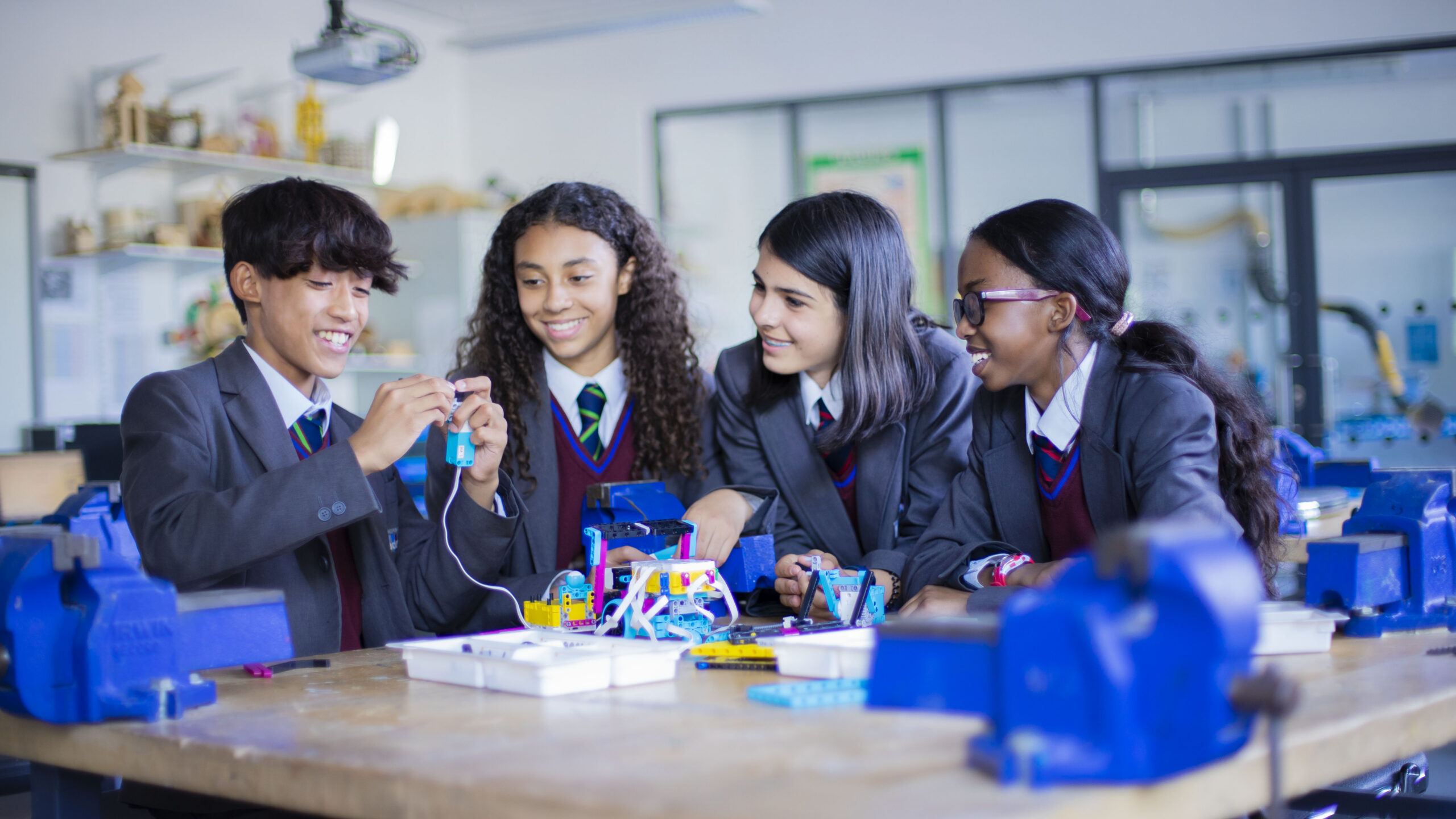
Students begin by developing strong foundations in safe working practices, core materials, tools and processes. Through hands-on projects, they learn to work with accuracy and creativity, exploring sustainability, digital design and problem-solving in real-life contexts.
As they progress, students are challenged with increasingly independent and ambitious design tasks that encourage resilience, curiosity and craftsmanship. Throughout the course, learners apply theoretical knowledge to practical situations – combining scientific and mathematical principles with aesthetic and user-focused thinking.
The AQA GCSE Design and Technology qualification builds on these foundations, offering a two-year pathway where students explore a wide range of materials -including wood, metal, plastics and textiles – and learn how modern technology, sustainability and manufacturing processes influence design.
In the Non-Exam Assessment (NEA), students apply their skills to a substantial design-and-make project in response to a contextual challenge. They identify and investigate a design problem, generate and develop ideas, create a prototype, and evaluate their final product. This process strengthens analytical, creative and evaluative thinking while reflecting real-world industry practices.
By the end of Key Stage 4, students are confident in using digital tools such as CAD and CAM, producing professional-level design work and demonstrating independence, organisation and resilience, key attributes for higher study and employment in design-led fields.
Year-by-Year Curriculum
Year 10
Students begin by exploring materials, processes and design principles through practical projects that reinforce core concepts.
Modules include:
- Designing & Making Principles – Fidget Spinner Project (Modules 1 & 2)
- Core Technical Principles 1 & 2 (Modules 3 & 4)
- Specialist Technical Principles – Trinket Box (Modules 5 & 6)
Lessons combine creativity with precision, ensuring students understand the technical underpinnings of good design while refining their practical skills.
Year 11
Students focus on their Non-Exam Assessment (NEA), applying knowledge and skills developed in Year 10 to produce a design portfolio and prototype.
Modules include:
- NEA Section B & C (Module 1)
- NEA Section D (Module 2)
- NEA Section D–E (Module 3)
- NEA Section E & Examination Preparation (Modules 4–6)
This year allows students to demonstrate independence, technical mastery and creative problem-solving while preparing for the final written examination.
Skills Gained
- Design thinking and creative problem-solving
- CAD and CAM proficiency
- Project management and organisation
- Analytical and critical evaluation
- Technical drawing and modelling
- Communication and presentation
These skills equip students to approach challenges with confidence, adaptability and precision, attributes valued across all industries.
Partnerships & Enrichment
Students benefit from access to professional insight and external expertise through partnerships with:
- Reach Out Makerspace
- Imperial College

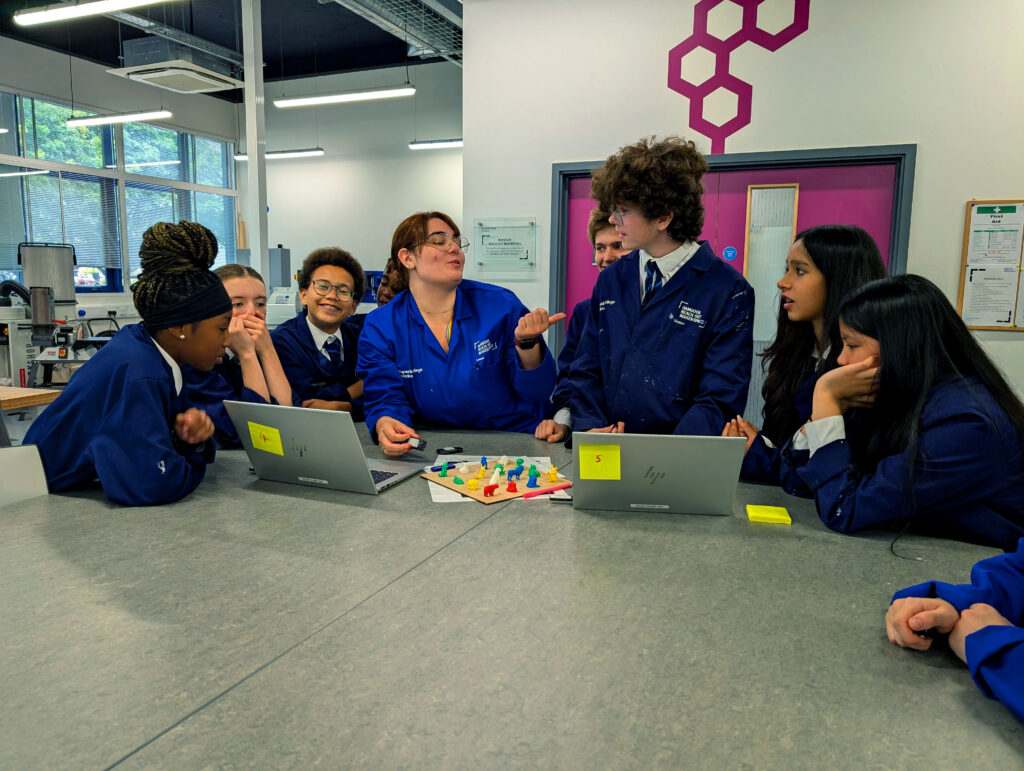
These partnerships provide opportunities to experience real-world design environments, gain feedback from industry professionals and explore emerging technologies.
Potential Careers & Progression
Design and Technology prepares students for progression to:
A-Level Design and Technology:
Product Design | BTEC or AAQ Engineering or Creative Design pathways | Apprenticeships in Architecture, Engineering | Industrial Design
Potential careers include:
Product Design | Architecture | Interior Design | Graphic Design | Engineering | Manufacturing
The subject nurtures creativity and practical problem-solving, all essential skills in the innovation-driven global economy.