Year 10 – 11
Business Studies

Key Stage: KS4

Exam Board: Edexcel

Qualification Gained: GCSE Business Studies

Assessment breakdown:
The Pearson Edexcel GCSE (9–1) Business course is assessed through two written examinations, each worth 50% of the final grade.
Paper 1: Investigating Small Business (50%)
- Written exam: 1 hour 30 minutes
- Focuses on small businesses and enterprises
- Topics include enterprise and entrepreneurship, spotting business opportunities, putting business ideas into practice, and making the business effective.
Paper 2: Building a Business (50%)
- Written exam: 1 hour 30 minutes
- Focuses on growing businesses
- Topics include growing the business, marketing, operations, finance and human resources.
Both papers assess knowledge, application, analysis and evaluation skills. Students respond to multiple-choice, short-answer and extended writing questions based on real business contexts.
The Business curriculum at Hammersmith Academy equips students with the knowledge, confidence and analytical skills required to understand how businesses operate in the real world.
Our vision is to:
- Deliver an engaging and practical curriculum rooted in real-world business scenarios.
- Build knowledge progressively from enterprise concepts to strategic business decision-making.
- Develop financial literacy and commercial awareness.
- Encourage entrepreneurial thinking, creativity and innovation.
- Ensure inclusivity so all learners can access and succeed.
- Prepare students for further study and employment in a competitive global economy.
At Hammersmith Academy, we aim to:
Deliver a dynamic and skills-based Business curriculum aligned to Pearson Edexcel.
Students develop understanding of:
- How businesses start, grow and operate successfully
- Financial decision-making and profitability
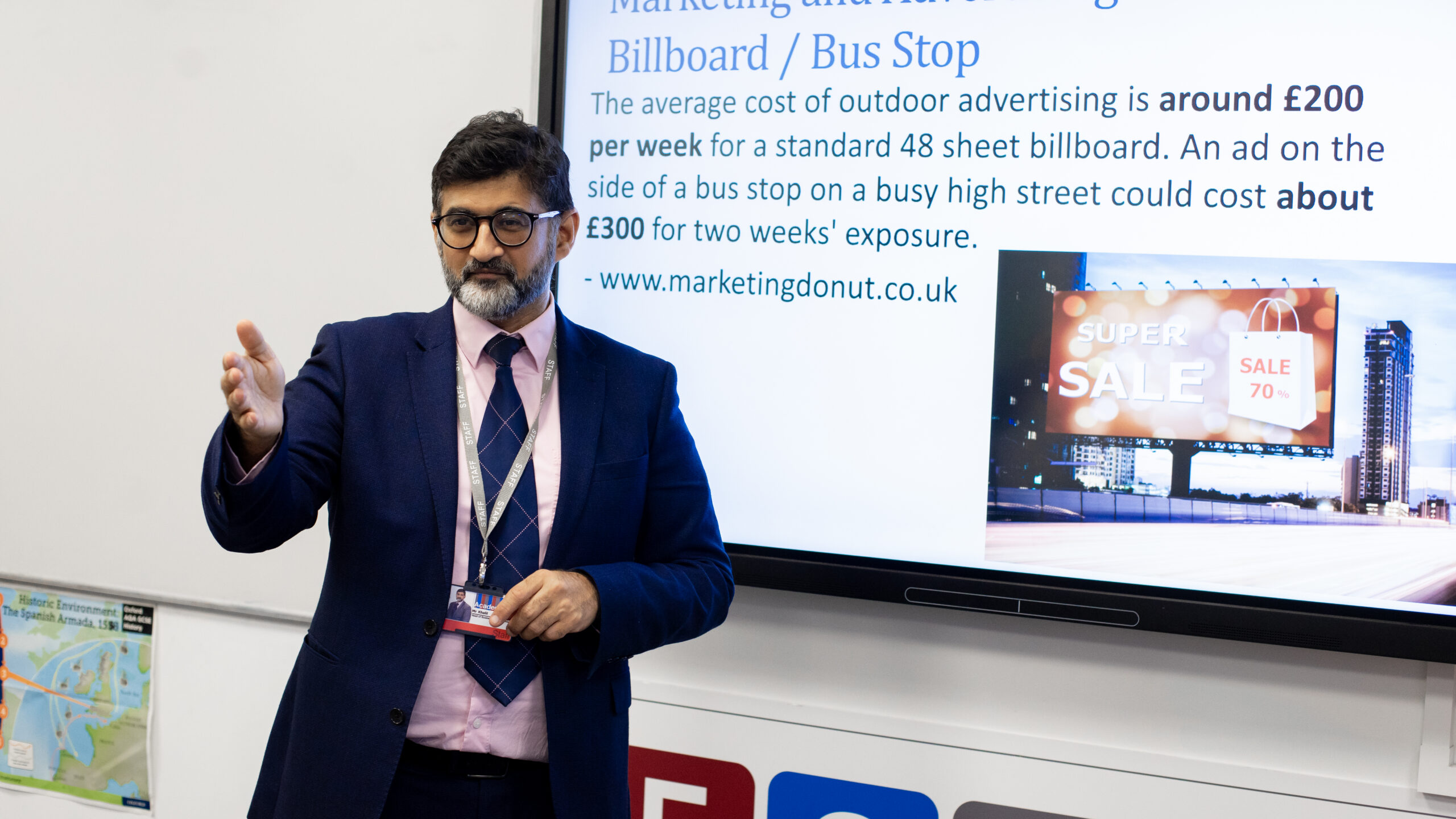
- Marketing strategies and branding
- Operations and resource management
- Human resource management and leadership
Lessons incorporate case studies, financial calculations, business planning activities and exam-style practice.
Year-by-Year Curriculum
Year 10 – Theme 1: Investigating Small Businesses
Students develop core business vocabulary and learn to calculate revenue, costs and profit while analysing entrepreneurial decision-making.
Modules include:
- Enterprise and Entrepreneurship (Module 1)
- Spotting a Business Opportunity (Module 2)
- Putting a Business Idea into Practice (Module 3)
- Making the Business Effective (Module 4)
- Understanding External Influences on Business (Module 5)
Year 11 – Theme 2: Building a Business
Students deepen their understanding of business growth, economies of scale, globalisation, branding and workforce planning. There is strong focus on exam preparation and extended evaluative writing.
Modules include:
- Growing the Business (Module 1)
- Making Marketing Decisions (Module 2)
- Making Operational Decisions (Module 3)
- Making Financial Decisions (Module 4)
- Making Human Resource Decisions (Module 5)
Skills Gained
- Entrepreneurial thinking and creativity
- Financial literacy and numeracy skills
- Analytical and evaluative writing skills
- Decision-making and problem-solving
- Data interpretation and calculation
- Communication and teamwork
Partnerships & Enrichment
Students benefit from a range of enrichment opportunities that provide insight into the world of business and develop enterprise skills.
- Links with St Paul’s School and related opportunities
- Young Enterprise programme
- Livery Company Entrepreneurship Challenge

Potential Careers & Progression
GCSE Business provides a strong foundation for:
A-Level Business | Economics | BTEC Business | T-Level Management and Administration | Business-related apprenticeships
Career pathways include:
- Entrepreneurship
- Marketing and Advertising
- Accounting and Finance
- Human Resource Management
- Banking and Investment
- Management and Consultancy