Year 12 – 13
Sociology

Key Stage: KS5

Exam Board: OCR

Qualification Gained: A Level Sociology

Assessment Breakdown:
The OCR A-Level Sociology course is assessed through three written examinations at the end of Year 13:
- Paper 1: Introducing Socialisation, Culture and Identity (30%) – Explores the nature of socialisation, identity, and culture, including an optional topic on The Media.
- Paper 2: Researching and Understanding Social Inequalities (35%) – Focuses on sociological theory, research methods and social inequality.
- Paper 3: Debates in Contemporary Society (35%) – Explores Globalisation and the Digital Social World alongside the optional topic Crime and Deviance.
Each paper is 2 hours 15 minutes long and assesses knowledge, application, analysis, and evaluation through short and extended essay questions.

Entry Requirements: Students must have achieved eight or more GCSEs at grades 9–4, including a minimum Grade 6 in English Language and a Grade 6 in a Humanities subject.
Sociology at Hammersmith Academy challenges students to question the world around them — how societies function, how identities are formed, and how institutions influence our lives. The course cultivates curiosity, empathy and independent thought, encouraging students to think critically about issues of power, inequality and culture. By examining social behaviour through multiple perspectives, learners develop the awareness and analytical confidence needed to understand and shape the complex world they live in.
Sociology is the study of society — how it is organised, how it changes, and how individuals and groups interact within it. The A-Level course examines key sociological theories, research methods and contemporary social issues such as inequality, power and identity. Students investigate the ways in which institutions such as education, media and family influence social behaviour, values and opportunity.
The curriculum is sequenced to develop analytical, evaluative and critical thinking skills alongside subject knowledge. Students learn to interpret and assess sociological data, construct balanced arguments and apply theory to real-world examples. Through debate and discussion, they develop empathy and a deep understanding of diversity and social change.
In Year 12, students study Socialisation, Culture and Identity, and the optional topic Media for Paper 1, alongside Researching and Understanding Social Inequalities for Paper 2. These topics establish the theoretical and methodological foundations of Sociology, exploring how culture and identity are shaped through interactions and representations.
In Year 13, students progress to the synoptic content of Globalisation and the Digital Social World (Paper 3), exploring how technology, digital communication and globalisation have transformed identity, relationships and culture. They also study Crime and Deviance, examining patterns of offending, theories of social control, and the role of the criminal justice system.
By engaging with a wide range of case studies and sociological perspectives, students develop a nuanced understanding of the factors that influence human behaviour and the structures that shape our world. They emerge as independent, reflective learners ready to apply their sociological insight to higher education, careers and everyday life.
Year-by-Year Curriculum
Year 12
Students are introduced to core sociological theories, methods and concepts while exploring media influence and social inequality.
Modules include:
- Socialisation & Media (Modules 1–3)
- Inequalities & Research Methods (Modules 4–5)
- Revision and Assessment Preparation (Module 6)
Students build foundational understanding of research design, theoretical application and essay-based evaluation, setting the stage for advanced study in Year 13.
Year 13
Students consolidate their sociological understanding through advanced theoretical analysis and contemporary case studies.
Modules include:
- Crime and Deviance (Module 1)
- Crime and Deviance & Globalisation (Modules 2–3)
- Revision and Exam Practice (Module 4-5)
This year develops synoptic skills and the ability to make cross-topic connections, preparing students for university-style analysis and debate.
Skills Gained
- Critical thinking and analytical reasoning
- Essay writing and argument construction
- Research design and data interpretation
- Communication and collaboration
- Empathy and global awareness
- Independent study and time management
These transferable skills prepare students for success in higher education and a wide range of professional careers.
Partnerships & Enrichment
Students enhance their learning through visits, lectures and experiences that bring sociology to life, including:
- University Taster Day Sessions for Sociology
- Museum of Childhood
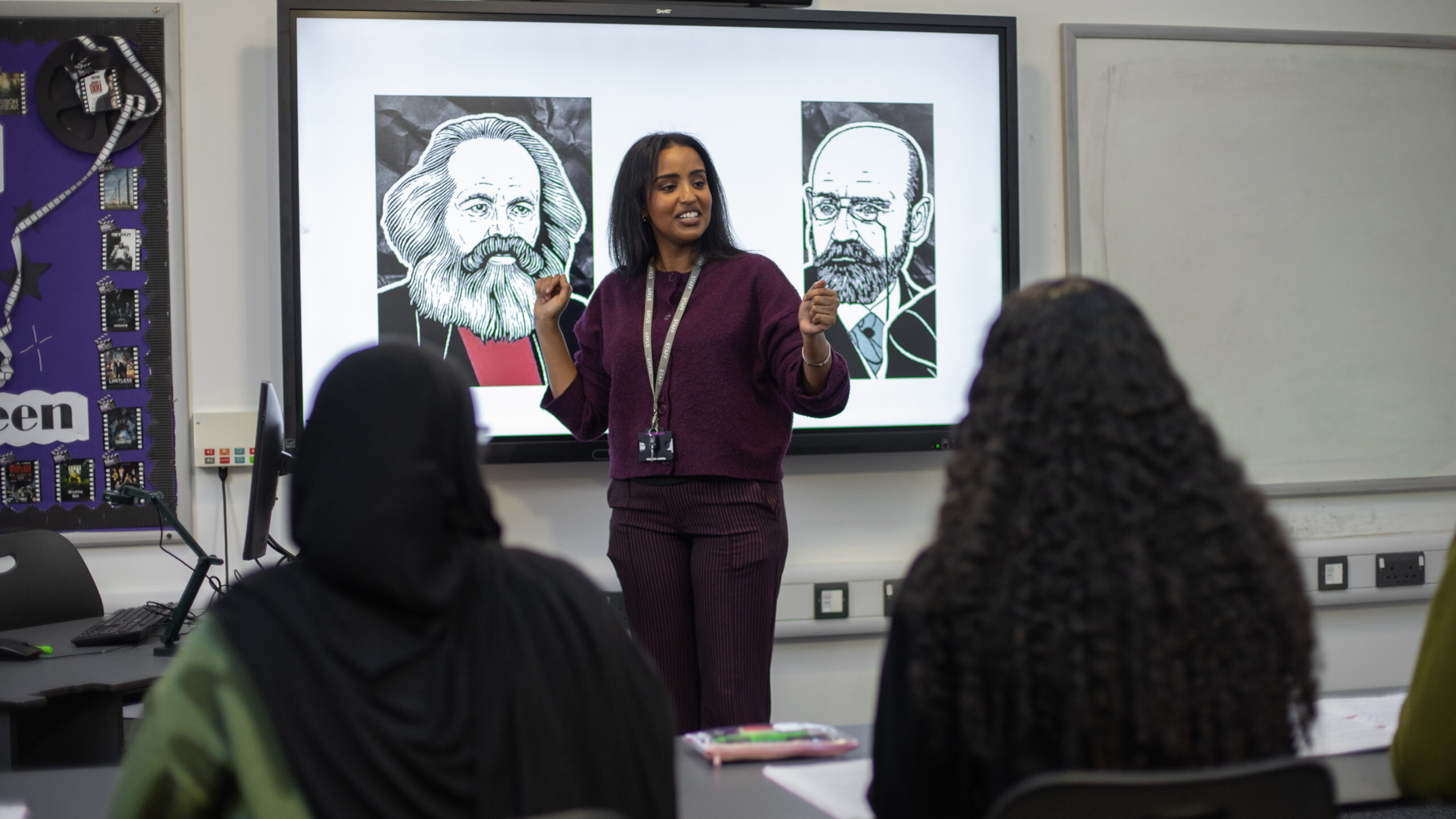
- Karl Marx’s Gravesite
- University Lectures (various)
- The Royal Courts of Justice
- Holocaust Learning at the Imperial War Museum
These enrichment opportunities help students connect sociological theory with real-world issues and contemporary debates.



Potential Careers & Progression
A-Level Sociology provides an excellent foundation for further study in:
- Sociology, Criminology, Psychology, or Social Policy
- Law, Politics, Education or Media Studies
Career pathways include:
Social Care Worker | Human Resources Representative | Market Research Analyst | Recruitment Consultant | Lawyer or Policy Researcher | Management Consultant | Survey Researcher
The analytical and communication skills gained in Sociology are valued across public, private and non-profit sectors.