Year 12 – 13
Art

Key Stage: KS5

Exam Board: Edexcel

Qualification Gained: A Level Art

Assessment Breakdown:
A Level Art is assessed through:
- Component 1: Personal Investigation (60%) – Internally set and assessed, externally moderated. Includes a practical portfolio and a written Personal Study (minimum 1,000 words).
- Component 2: Externally Set Assignment (40%) – Externally set paper released in Year 13. Includes a preparatory period followed by a 15-hour timed final piece.

Entry Requirements: Eight or more GCSEs at grades 9–4, including:
- Minimum grade 6 in Art and Design or equivalent.
A portfolio of work must also be presented.
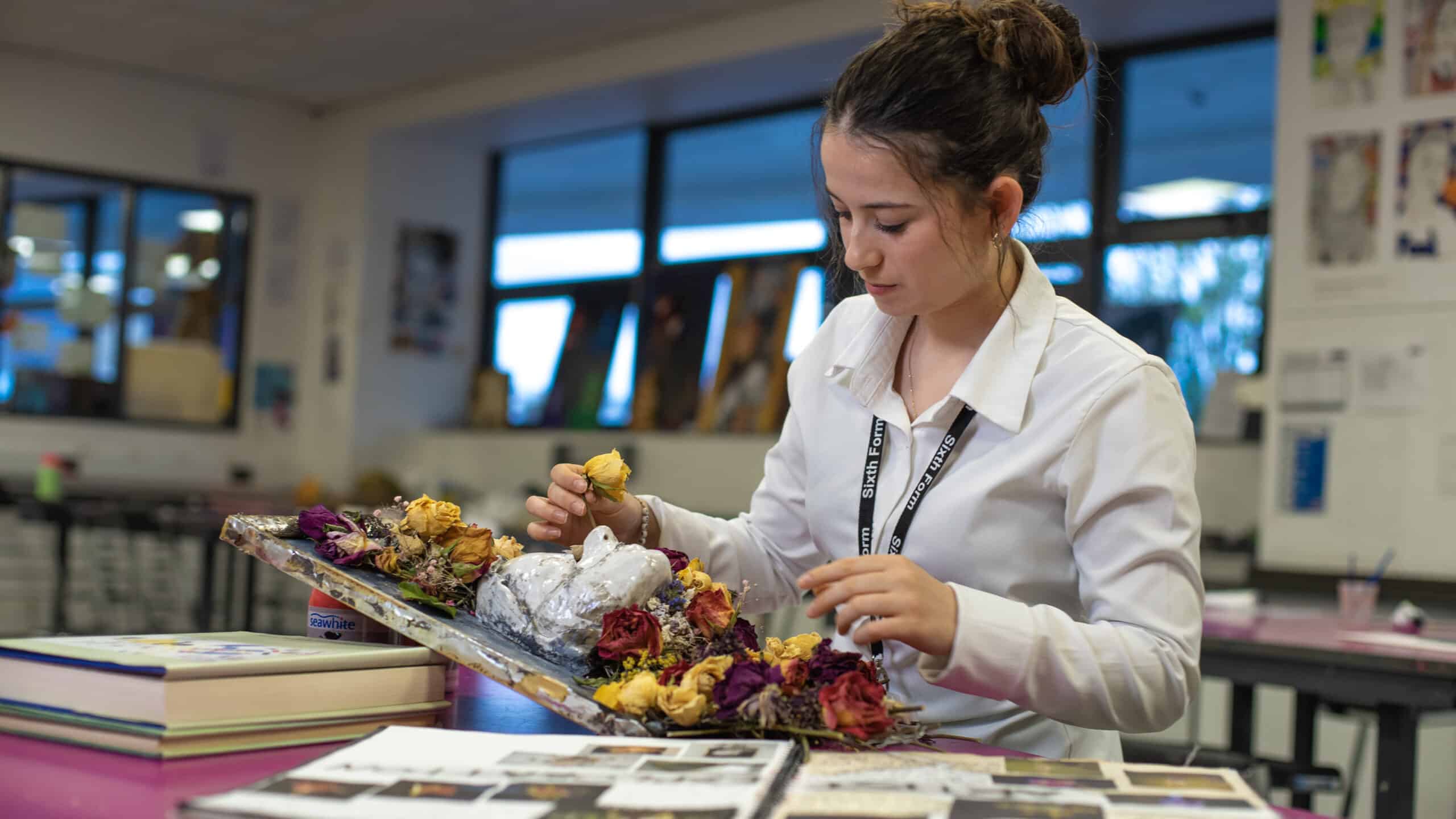
At Hammersmith Academy, the Art Department is built on the ethos that every student should use their creative voice as a powerful means of expression. Through a broad and balanced spiral curriculum, students develop as individuals – gaining confidence in their ideas, building technical skills across a range of media, and engaging with artistic contexts from historical to contemporary practice. The curriculum encourages curiosity, values individuality and promotes thoughtful, purposeful making, enabling students to express their identity and perspective with growing confidence and independence.
Our curriculum equips students with proficiency across a range of disciplines including drawing, painting, sculpture, and diverse craft and design techniques. Alongside technical development, students strengthen analytical skills through the study of artists and artistic movements, building a nuanced understanding of the language of art, craft, and design.
At Key Stage 5, students work with increasing independence and conceptual depth. The curriculum is designed to:
- Develop sustained, independent investigation
- Encourage experimentation across materials and processes
- Build contextual understanding through historical and contemporary research
- Strengthen critical analysis of artists and personal work
- Support the development of a personal visual language
Students are encouraged to take creative risks, refine their ideas through purposeful experimentation and produce resolved outcomes that show clear intent. Through reflective practice and persistent trial, they grow into confident, independent artists who can communicate complex ideas with clarity and technical control.
Year-by-Year Curriculum
Year 12
Year 12 introduces advanced technical exploration and increasingly independent ways of working, forming the foundation for sustained personal investigation.
Modules include:
Module 1: A Level Art Workshops
Development of advanced practical skills across a range of media and processes.
Module 2: Introduction to Independent Project
Students begin shaping personal themes and lines of enquiry.
Module 3: Artist Research and Response
In-depth research into relevant practitioners, leading to practical responses.
Module 4: Artist Response and Developments
Refinement and experimentation to extend ideas and techniques.
Module 5: Theme Development
Sustained investigation into a chosen theme, strengthening conceptual understanding.
Module 6: Final Piece Plan, Make & Review
Planning, creating, and critically reviewing a resolved outcome.
Year 13
Year 13 focuses on the completion of assessed components and the development of a mature, cohesive body of work.
Modules include:
Module 1: Component 1 Personal Investigation & Personal Study Start
Students begin their sustained personal enquiry alongside the written Personal Study.
Module 2: Component 1 Completion
Completion and refinement of practical investigation and written analysis.
Module 3: Component 2 Externally Set Assignment
Independent response to an externally set theme, supported by preparatory studies.
Module 4–5: Component 2 Development & Final Piece
Sustained development culminating in a final outcome produced under timed conditions.
Skills Gained
Through A Level Art, students develop independence, creative confidence, and critical awareness. The course strengthens both technical skills and conceptual understanding. Students develop:
- A creative approach to problem solving
- Understanding of art in historical and cultural contexts
- Critical analysis of their own work and the work of others
- Confidence to experiment and refine ideas
- The ability to articulate personal artistic intentions
These skills support progression to higher education and creative professional pathways.
Partnerships & Enrichment
Students benefit from opportunities to engage with professional practice and leading cultural institutions, supporting contextual understanding and artistic development. Enrichment opportunities include visits to:
- Saatchi Gallery
- Tate Modern
- White Cube
- Royal Academy of Arts
Additional experiences include visiting artist workshops and photographic walks, enabling students to observe contemporary practice first-hand and apply insights to their own work.


Potential Careers & Progression
A Level Art supports progression to higher education in creative and design-based disciplines, as well as related academic pathways.
Potential career pathways include:
Fashion Design | Textile Design | Interior Design | Photography | Graphic Design | Fine Art | Illustration | Animation | Jewellery Design | Film Making | Theatre and Set Design | Architecture | Art Therapy
The creative, analytical, and independent working skills developed through A Level Art are highly valued across the creative industries and beyond.