Year 12 – 13
Digital Media

Key Stage: KS5

Exam Board: OCR

Qualification Gained: CTEC Level 3 Extended Certificate in Digital Media

Assessment Breakdown:
CTEC Digital Media is assessed through:
- Two written examination papers (Year 12 and Year 13)
- Four Coursework units (Project planning, pitching and creating)

Entry Requirements: Eight or more GCSEs at grades 9–4 including a minimum Grade 5 in GCSE English Language. Grade 5 in Media or a merit (if studied at GCSE).
We aim to empower students to become creative, technically skilled, and critically aware practitioners capable of designing, analysing, and producing digital media for an increasingly dynamic and fast-changing industry. Through a blend of theoretical study and hands-on production work, learners build the confidence, creativity, and technical expertise needed to thrive in the creative and digital sectors.
At Key Stage 5, students extend their prior understanding of media through the study of media language, representation, audience engagement, and industry contexts. These fundamental concepts are applied to digital media forms including advertising campaigns, websites, social media content, audio-visual production, and interactive digital products.
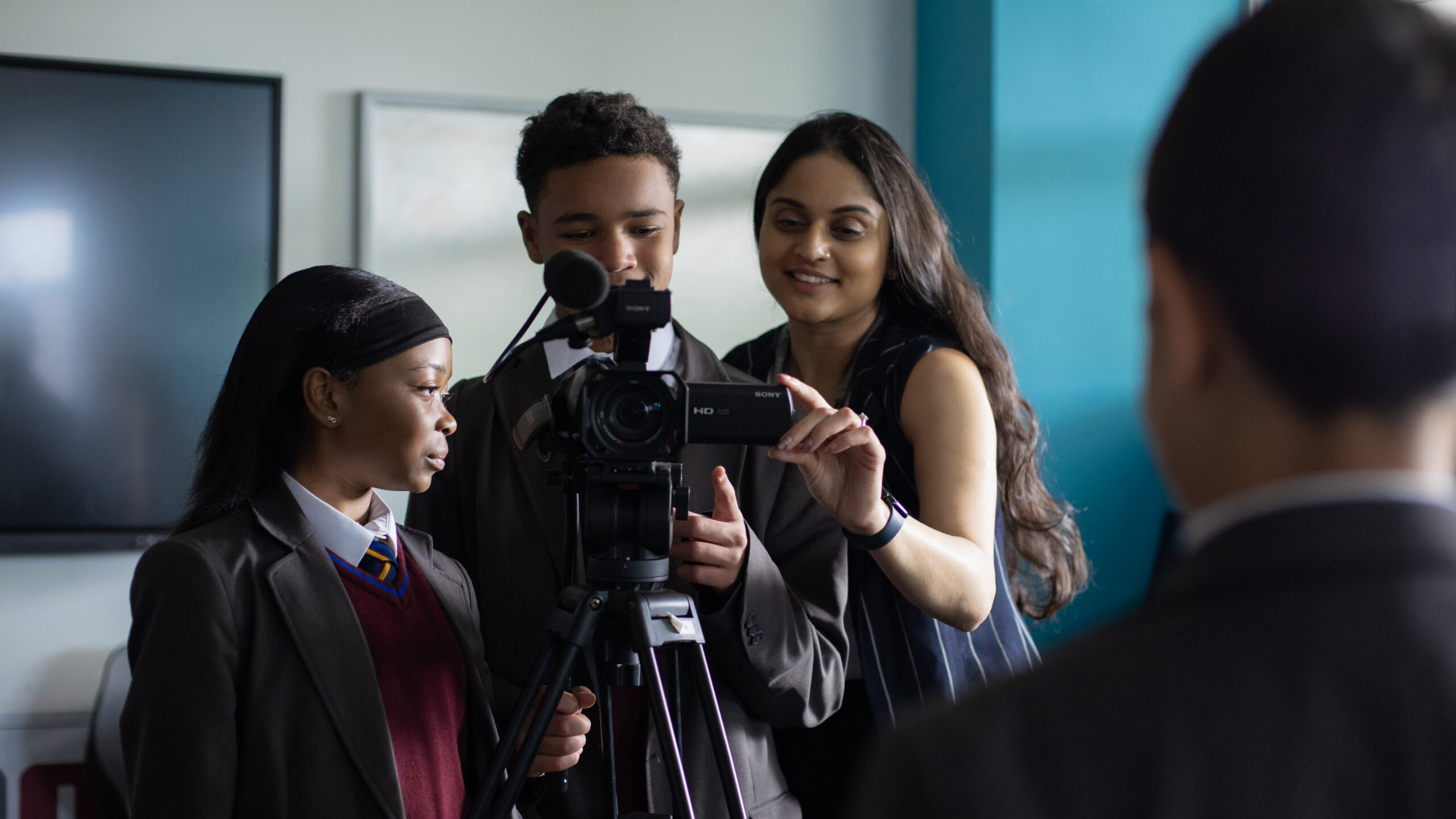
The curriculum is cumulative and skills-focused, allowing students to revisit and refine core knowledge and production techniques throughout the course. Learners use industry-standard software such as Adobe Photoshop, Illustrator, Premiere Pro and other digital tools to develop high-quality creative work.
Practical production elements are integral to the qualification. Students learn how to manage a full production process—researching, planning, pitching, creating, editing, and evaluating media products to a professional standard. Coursework units enable students to demonstrate independence, creativity, and technical proficiency by responding to real-world style briefs.
The course develops:
- Strong presentation, pitching and communication skills
- Critical and analytical skills for evaluating media products
- Technical and creative production skills
- Knowledge of audience behaviour, branding, and industry practices
- Understanding of representation, genre, media language and media effects
- Effective project planning, problem-solving and collaboration
Year-by-Year Curriculum
Year 12
Module 1: Unit 1 – Media Products & Audiences
- Ownership models of media institutions
- Media distribution and advertisement strategies
- Target audience profiles
- Evaluating and interpreting research data
Module 2: Unit 1 – Media Products & Audiences
- Encoding meaning
- Legal, ethical and regulatory frameworks in media
Module 3: Unit 21 – Plan & Pitch a Media Product
- Responding to a brief
- Developing proposals and pitch documents for a client
Module 4: Unit 21 – Plan & Pitch a Media Product
- Pitching concepts and creative solutions based on a client brief
Module 4 / 5 / 6: Unit 3 – Create a Media Product
(Delivered across three modules)
- Production proposals and sample materials
- Pre-production planning
- Creation of media assets
- Post-production editing and refinement
- Producing a final media product aligned to professional standards
Year 13
Module 1: Unit 2 – Pre-Production and Planning
- Planning processes for media products
- Client requirements and audience expectations
- Creating and evaluating pre-production documents
Module 2: Unit 2 – Pre-Production and Planning
- Completing and refining pre-production materials for assessment
Module 3: Unit 20 – Advertising Media
- Analysing cross-media advertising campaigns
- Planning cross-media promotional strategies
Module 4: Unit 20 – Advertising Media
- Producing components of a cross-media campaign
Module 4 / 5: Unit 23 – Create a Personal Media Profile
- Understanding the purpose of a media portfolio
- Planning and repurposing content
- Producing a professional personal media profile showcasing creative work
Skills Gained
Students develop a strong blend of creative, technical, analytical and professional skills, including:
- Digital design and content creation
- Image editing, layout, and post-production techniques
- Use of industry-standard software (Adobe Creative Suite)
- Analytical and research skills, including market and audience analysis
- Understanding of representation, genre and media effects
- Project management and collaborative working
- Pitching, presenting and responding to client briefs
Partnerships & Enrichment
Students benefit from access to creative and industry-led enrichment, including:
- Film screenings and analysis workshops
- Media Careers Conferences
- Opportunities to use professional-standard design and editing software
- Guest speakers from media and creative industries
These experiences deepen students’ understanding of the media landscape and support progression into university and related careers.
Potential Careers
This course offers a strong foundation for a wide range of media, creative, cultural and communication-based careers, including:
Graphic Designer | Web Designer | Digital Illustrator | Video Editor | Social Media Content Creator | Digital Marketing Specialist | PR Assistant | Broadcaster | Media Researcher | Animator | Games Designer | UX Designer | Audio Mixer